A Taste of Early Spring 浪淘沙·探春
A Taste of Early Spring
—To the tune of “Sand Washed by Tides”
Chinese original: Su Shi
English version: Julia Min (Nov. 2024)
From the east gate of Hangzhou City,
We ride out for a taste of early spring.
Stirring in sheath, buds swell on trees;
Over fences, apricots bow to the wind.
Poetry in motion—the call of Spring.
On a country road, a faint scent roams.
In a field of snow, a village lies unknown.
A touch of magic by the God of Spring—
In a world of icy cold and pure serene,
Her first promise honours plum blossom.
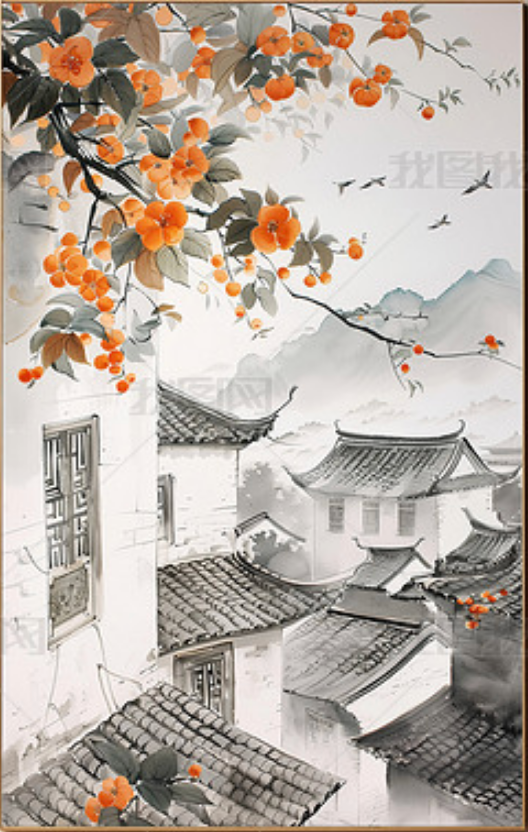
Analysis:
This little poem was composed in 1072, the same period as another of Su Shi's works, "A Farewell Toast to Shugu at Youmei Hall," which is also selected for this book.
Spring has been celebrated across centuries and cultures, yet what distinguishes Su Shi's "A Taste of Early Spring" is its ingenious blending of the visual and the sensory—and, more subtly, its quiet contrast between two faces of the season: the boisterous and the serene.
Inside the city walls, spring announces itself with abundance and motion. Buds stir in their sheaths, swelling toward light; apricot branches bow over fences, swaying like poets moved by their own verse. Here is spring as performance—"poetry in motion"—the call of the season in full voice.
But beyond the east gate, a different spring unfolds. A village lies buried in snow, half-hidden, half-dreaming. No brilliant blossoms greet the eye. Instead, only a faint scent roams the country road—elusive, almost shy. In this world of icy cold and pure serene, the God of Spring does not arrive with fanfare. He works by a gentle touch of magic, and his first whisper honours not the showy apricot but the quiet plum blossom in solitude.
This contrast reveals the poet's heart. The plum blossom, blooming alone in the cold, asking for no audience, becomes a symbol of integrity, resilience, and inner grace. To prefer the plum is to value what endures over what dazzles—to find the deepest spring not in spectacle, but in silence, not in the crowd, but in the soul's first quiet promise.
Let your imagination follow this association, and you will begin to understand why, for centuries, Chinese poets and artists have loved the plum blossom above almost all other flowers. It is spring's first and most faithful voice—not the loudest, but the most gracious.
浪淘沙·探春
原作: 苏轼(字子瞻, 号东坡居士; 11世纪北宋)
昨日出东城, 试探春情,
墙头红杏暗如倾。
槛内群芳芽未吐, 早已回春。
绮陌敛香尘, 雪霁前村。
东君用意不辞辛。
料想春光先到处, 吹绽梅英。
Reference:
picture from https://so.ooopic.com/sousuo/1762538/

Comments